Vol. 14 No. 2 (2024)

Full table of contents

Published on 2024-12-18

Articles

View All Issues

Most read in the last year

  1. 10 Reads
  2. 5 Reads
  3. Measuring early reading skills using valid and reliable instrument

    Fatkhur Rizki Raharjo, Fery Muhamad Firdaus, Rahmat Fadhli

    1 Reads
  4. The effectiveness of animated video on social science learning outcomes and activeness in elementary school students

    Luhur Wicaksono, Dafid Ginting, Muhammad Rijal Fadli, Jems Sopacua, Iwan Ramadhan, Mega Cantik Putri Aditya

    1 Reads

About the Journal

More about the journal

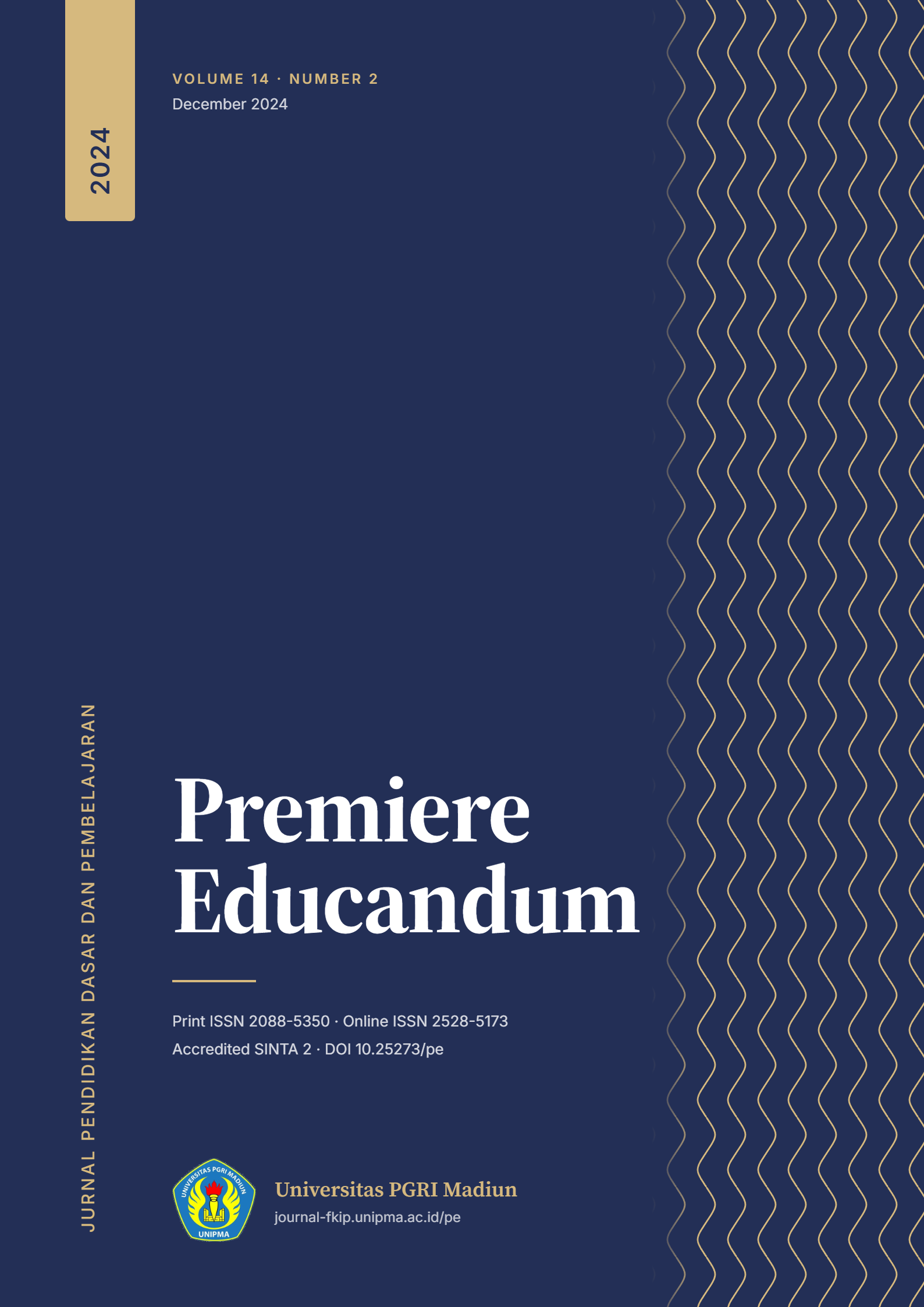
PREMIERE EDUCANDUM: Jurnal Pendidikan Dasar dan Pembelajaran is a peer-reviewed scientific journal dedicated to disseminating research findings from professors, teachers, practitioners, and scientists in the field of basic education. The journal covers elementary teaching, applied science, and analytical-critical studies in basic education. Its target readers include academics, students, teachers, and practitioners in the field of basic science education.


Before Submission

Authors must ensure that the manuscript has been prepared using PE's Template and follows the author guidelines. Manuscripts that do not comply with the guidelines, template, or focus and scope will be immediately rejected. Only manuscripts meeting all journal requirements will be processed further. Registration and login are required to submit manuscripts online and to monitor submission status.

Premiere Educandum: Jurnal Pendidikan Dasar dan Pembelajaran is defined by its focus on the future, providing a platform for research on the challenges and developments that education will face in the years ahead.

The journal is an international, peer-reviewed, open access publication that presents original work across all areas of elementary education. It serves the community as a broad-scope venue for academic trends and future developments in the field.

We particularly welcome research with the potential for global impact.

Scope

The journal covers a broad range of areas related to education in elementary schools, addressing both formal and informal education across multiple contexts. Its particular focus is on students, teachers and parents, their social interactions, and the political contexts in which these are embedded.

Methodologically, the journal is eclectic: it supports the full range of research methods, provided the work addresses issues of genuine importance and significance.

Topics

Specific topics include, but are not limited to:

01 Early STEM education for elementary school students
02 Cooperative learning
03 Thinking process
04 Distance education
05 Educational technology
06 Teaching and learning in elementary education
Sustainable Development Goals

Work published in this journal contributes to the United Nations 2030 Agenda, and authors are encouraged to state in the introduction which goal their study addresses. The journal is anchored in Goal 4, with several other goals reached through the elementary classroom.

Goal 4 · Primary alignment Quality Education Ensure inclusive and equitable quality education and promote lifelong learning opportunities for all. Manuscripts are most relevant to the following targets:
4.1  Free, equitable and quality primary education 4.2  Early childhood development and school readiness 4.5  Equal access for vulnerable learners 4.7  Education for sustainable development and global citizenship 4.a  Safe, inclusive and child-friendly learning environments 4.c  Supply and quality of qualified teachers

Supporting goals frequently addressed by research in elementary education:

Goal 3 Good Health and Well-being School health programmes, nutrition, physical education, student mental well-being.
Goal 5 Gender Equality Gender gaps in achievement, bias in teaching materials and classroom interaction.
Goal 10 Reduced Inequalities Inclusive education, rural and remote schooling, learners with special needs.
Goal 13 Climate Action Environmental literacy, climate and disaster education in the primary curriculum.
Goal 16 Peace, Justice and Strong Institutions Character education, anti-bullying, civic values and school governance.
Goal 17 Partnerships for the Goals School, family and community collaboration; cross-country research partnerships.